Sunday, February 15, 2009
Apologies
I can't believe it has been near a month since we last posted anything! It has been a hectic month. I started my final degree requirement for my bachelors which takes up much of my time and leaves Matthew with very little of his since he then has to watch our children. Matthew also received a call to another congregation and so we have been spending much of our "free" time talking and praying about that. I just wanted to let you all know that we are still here and still working towards our adoption...just at a slower pace than before.


Wednesday, January 21, 2009
Curious?
A lot of people have been asking a lot of questions lately regarding our adoption. Most of them are answered here - somewhere - on our blog. Three of them are not - or at least I don't think they are. So, I thought I would answer them all in one blog post since I can think of nothing earth-shatteringly amazing to tell you :)
Question #1: What agency are you with?
Answer #1: Two agencies actually.
Question #2: What do you mean? (I know, these two could be combined but that would only be two questions then, wouldn't it?)
Answer #2: Our homestudy agency is Lutheran Social Services of Wisconsin and Upper Michigan and our placement agency is Children's Home Society and Family Services of Minnesota.
Question #3: Are you trying for a girl?
Answer #3: No, we are leaving that up to the Ethiopian orphanage and government along with our agencies and ultimately, it is all up to God. Are we hoping for a girl is a totally different question :)
Friday, January 16, 2009
Adoptive Families the Norm for Christian Families

So I'm reading the book "Passing On the Faith," by Merton P. Strommen and Richard A. Hardel in preparation for a class I'm going to teach at Concordia University- Wisconsin (pretty good read, by the way... if you're at all involved in family ministry or in ensuring that the children of your congregation are raised in the faith). I'm not very far into it yet, but the first chapter talks a lot about how strong, life-changing families need to build and maintain two key relationship- a strong family relationship and a strong relationship with God. The argument is that these relationships are two sides of the same coin and that the church needs to help families to encourage and support this sort of faith formation in the home. The chapter then goes on to try and define what family is (you have to decide on what family "is" before you can try and address how to help it!). It was in this context, then, that I came across this throwaway paragraph that speaks strongly to the notion of adoptive familes as normative for the definition of a Christian family:
As the first and most basic community, the family acts as a model for other, larger faith-learning communities. Diana Garland, director of the Family Ministry Project located at Louisville Presbyterian Theological Seminary, in Kentucky, defines family. According to her, the model of family that Jesus endorses is the adoptive family. The last act of Jesus' earthly ministry recorded in the Gospel of John enacts that adoptive model. Jesus turns to his mother and says, "Woman, behold your son." Then turning to the beloved disciple he says, "Behold your mother." The Church follows Christ by ensuring that no one in the family of faith is familyless- everyone is adopted into the family." (revised edition, 2008, p.23).Not only do I agree wholeheartedly with this quote from Diana Garland, but I think it strikes right to the heart of what Maggie and I wish to do. Although I believe Garland's intention was to state that the congregation itself functions as a family of believers, thereby ensuring that no one in the congregation be "familyless," still I think it speaks to our domestic families as well. After all, it seems pretty clear that God is calling Christians to reach out in Christ-like love to many types of needy people- orphans being (if not foremost) at least prominent in that group.
God is speaking to His people through His Word, calling us to love one another as Christ has loved us (1 John 4:19), the question for us is: are we listening?
Thursday, January 15, 2009
Ethiopian Museums
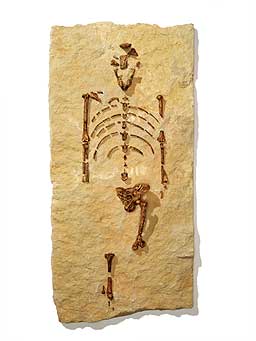
So, I kind of have a new job. I am now an intern at the Leigh Yawkey Woodson Art Museum and it is amazing...but this also means that I have less time for the adoption. While it has been difficult not to focus on the adoption and all that goes with it, I know I have to get this internship out of the way before we bring our baby home. So, I am an arts manager for the next 12-13 weeks. In light of my current job I wanted to bring to your attention the following -- nothing very exciting but it is something to do with two things I love -- art and Ethiopia. The online arts journal I read features a collection of news stories and blogs on art and culture. The following link is a short blog about the loss of funds for Ethiopian museums due to budget cuts by other museums around the world...in this case Chicago's Field Museum. www.artsjournal.com/culturegrrl/2009/01/skeletal_budget_cut_no_lucy_fo.html
Friday, January 9, 2009
Passports and Adoption Paperwork
Greetings! So, we are still waiting on one background check (Marathon County Sheriff's Department). Hopefully, they get it in soon. It was the only background check I had to pay for and it is the only one that took longer than a week! Grrrr. While we are waiting for that - and while I have some "free" time on my hands - I am getting my passport application ready. That's right...I've never had a passport. I'm old enough to remember when you didn't need a passport to cross the Mexican border :) So, I am filling out my application - which is quite exciting by the way - and getting the needed fees, proof of identity, proof of citizenship and all that wonderful stuff together. Then it is on to Matthew's renewal application. The picture on his old passport is AWESOME! Ask him -- wait, ask me and I will show it to you.
Wednesday, January 7, 2009
Melkam Genna!
Happy Christmas (Melkam Gena) to you all!
According to Christian Orthodox tradition Christmas falls on January 7th. A little less than half the population in Ethiopia belongs to the Ethiopian Orthodox Christian Church. Christmas in Ethiopia is called Lidet (or Leddat) and is not the religious and secular festival that it is in the West. On Christmas Eve, January 6, the city is crowded with pilgrims and tourists from all parts of the world. The people remain outdoors all night, praying and chanting. On January 7, the Ethiopian Christmas known as Ganna is celebrated. The word Ganna is used interchangeably with the word Christmas, to mean the birth of Jesus Christ (Leddat). Traditionally, young men played a game similar to hockey, called genna, on this day, and now Christmas has also come to be known by that name. The preparation of the feast is an important part of the day in Ethiopia. A typical Ethiopian feast for the Christmas meal includes a main course, such as doro wat ( a spicy chicken stew), injera (a flat round bread) and homemade wine or beer. The injera is used to scoop and eat the food, thereby replacing ordinary utensils. Gift giving in an Ethiopian Christmas celebration is a very small part of this ceremony. Children, if they receive gifts, usually receive simple presents such as clothing.
Wednesday, December 31, 2008
Endemic Mammals of Ethiopia
There are seven endemic (specific to one area) mammals of Ethiopia. Many of them are endangered but all are absolutely beautiful.
Canis simensis: Ky Kebero (Amharic), Jedala Farda (Oromic) or Ethiopian Wolf is on the  International Union for Conservation of Nature and Natural Resources' (IUCN) Red List as Endangered. This creature is endemic to the Ethiopian highlands and is confined to seven isolated mountain range populations due to increasing agricultural pressure. There are approximately 500 adults left. Ethiopian wolves are long-limbed and slender with a reddish coat and white marking on the legs, underbelly, tail, face, and chin -- slightly resembing a Vulpes vulpes (Red Fox) in color. The boundary between the red and white fur is quite distinct. White markings on the face include a characteristic white crescent below the eyes and a white spot on the cheeks.
 International Union for Conservation of Nature and Natural Resources' (IUCN) Red List as Endangered. This creature is endemic to the Ethiopian highlands and is confined to seven isolated mountain range populations due to increasing agricultural pressure. There are approximately 500 adults left. Ethiopian wolves are long-limbed and slender with a reddish coat and white marking on the legs, underbelly, tail, face, and chin -- slightly resembing a Vulpes vulpes (Red Fox) in color. The boundary between the red and white fur is quite distinct. White markings on the face include a characteristic white crescent below the eyes and a white spot on the cheeks.
Equus asinus somalicus: Meda Ahia (Amharic) or Somali Wild Ass is on the IUC N's Red List as Critically Endangered. It is one of the wild ancestors of the domestic donkey -- the other ancestor exist in the northwest Indian deserts. It is possible that a few remain in Somalia, but the main herd is located on the Afar Plains of Ethiopia. There are three recognized species of the African Wild Ass. The Algerian Wild Ass has been extinct for many years. The Nubian Wild Ass, formerly abundant on the plains of Nubia and the Sudan deserts, was last recorded in northern Eritrea, however, total absence of sight records of the Nubian in recent years has led to the assumption that it too is extinct. The Somali Wild Ass is, therefore, very probably the only African Wild Ass left on earth and its numbers are, at best, around 200 mature members. Due to their roaming lifestyle, an accurate account of their numbers is impossible.
 N's Red List as Critically Endangered. It is one of the wild ancestors of the domestic donkey -- the other ancestor exist in the northwest Indian deserts. It is possible that a few remain in Somalia, but the main herd is located on the Afar Plains of Ethiopia. There are three recognized species of the African Wild Ass. The Algerian Wild Ass has been extinct for many years. The Nubian Wild Ass, formerly abundant on the plains of Nubia and the Sudan deserts, was last recorded in northern Eritrea, however, total absence of sight records of the Nubian in recent years has led to the assumption that it too is extinct. The Somali Wild Ass is, therefore, very probably the only African Wild Ass left on earth and its numbers are, at best, around 200 mature members. Due to their roaming lifestyle, an accurate account of their numbers is impossible.
Tragelaphus scriptus meneliki: Dukula (Amharic), Menelik Bushbuck, or Arussi Bu shbuck. Over forty races of bushbuck have been identified and are the smallest of the spiral-horned antelopes. They live only in the high mountains and forests of Ethiopia. Of the two Ethiopian races, meneliki and powelli, the latter is the more common and somewhat smaller. But Menelik's is also fairly widespread and can be seen in much of Ethiopia's highland forest up to the treeline. No accurate estimate has been made of their total population because of their nocturnal and furtive habits. It is usual to spot them from about four o'clock onwards, or in the early morning. They have a loud barking alarm call, like that of domestic dogs, which can be heard from some distance away, and also a series of grunts. Very few Menelik's have been collected by hunters. The multiplication of numbers in the park could lead to its greater accessibilty to authorized hunters.
 shbuck. Over forty races of bushbuck have been identified and are the smallest of the spiral-horned antelopes. They live only in the high mountains and forests of Ethiopia. Of the two Ethiopian races, meneliki and powelli, the latter is the more common and somewhat smaller. But Menelik's is also fairly widespread and can be seen in much of Ethiopia's highland forest up to the treeline. No accurate estimate has been made of their total population because of their nocturnal and furtive habits. It is usual to spot them from about four o'clock onwards, or in the early morning. They have a loud barking alarm call, like that of domestic dogs, which can be heard from some distance away, and also a series of grunts. Very few Menelik's have been collected by hunters. The multiplication of numbers in the park could lead to its greater accessibilty to authorized hunters.
 Tragelaphus buxtoni: Dega Agazain (Amharic) or Mountain Nyala is on the IUCN's Red List as Critically Endangered. It was the last of the great African antelopes to become known (in 1908) and very little is known about its habits or the full extent of its range even today. They lived at very high altitudes, between ten and thirteen thousand feet, in the mountain forests where it was cold and wet much of the time, until the pressure of the human population destroyed vast tracts of their forest habitat. In Arsi the population is now reduced to a remnant but the Bale population remains intact due to the creation and preservation of Bale Mountains National Park. The number of mature individuals is estimated at less than 2,500 Nyala.
Alceluphus bus elaphus swaynei: Korkay (Amharic) or Swayne's Hartebeest is on the IUCN's Red List as Endangered. The common African hartebeest has fifteen races of which two are already extinct. There are about 600 individuals remaining (with the majority of the population confined to the Senkelle Wildlife Sanctuary and Mazie N.P. in Ethiopia); no subpopulation numbers more than 250 mature individuals. The small size of the mature population makes it close to qualifying as Critically Endangered. Three types of horns can be distinguished in the buselaphus group: U-shaped, as in the now-extinct North African buba hartebeest, and in the western hartebeest from Gambela, Nigeria and Cameroon; V-shaped, as in the Lelwel Hartebeest, Jackson's Hartebeest and the South African cape hartebeest. The third type of horn is shaped like inverted brackets as in Coke's Hartebeest, in the pale tawny Alceluphus buselaphus tora from Sudan and Ethiopia, and Swayne's Hartebeest, previousy found in both Somalia and Ethiopia, but now restricted only to Ethiopia.
Theropithecus gelada: Gelada (Amharic) or Gelada Baboon is listed on the IUCN's Red List as Least  Concern/Vulnerable. There are two subspecies of the Gelada Baboon. The one that is classified as of Least Concern is Theropithecus gelada ssp. obscurus (common names: Southern Gelada, Eastern Gelada, Heuglin's Gelada) has a large range, remains abundant despite increasing threats. The other classified as Vulnerable is Theropithecus gelada ssp. gelada (common name: Northern Gelada) is located in Simien Mountains National Park but remains fragmented due to expanding agriculture. However in the Simien there are as 20,000, and troops of 400 together may be seen. While they are quite tame they live along the edges and steep slopes of precipices for safety. At night they climb down the steep cliff faces to caves where they roost on ledges, often huddled close together for warmth as Simien nights are frosty and bitterly cold. Apart from feeding, "grooming" is their other main pastime. This entails simply picking through each other's fur. This is not only a friendly and peaceful occupation, but it serves also to establish bonds between various members of the group and to cement the accepted relationships in the hierachy.
 Concern/Vulnerable. There are two subspecies of the Gelada Baboon. The one that is classified as of Least Concern is Theropithecus gelada ssp. obscurus (common names: Southern Gelada, Eastern Gelada, Heuglin's Gelada) has a large range, remains abundant despite increasing threats. The other classified as Vulnerable is Theropithecus gelada ssp. gelada (common name: Northern Gelada) is located in Simien Mountains National Park but remains fragmented due to expanding agriculture. However in the Simien there are as 20,000, and troops of 400 together may be seen. While they are quite tame they live along the edges and steep slopes of precipices for safety. At night they climb down the steep cliff faces to caves where they roost on ledges, often huddled close together for warmth as Simien nights are frosty and bitterly cold. Apart from feeding, "grooming" is their other main pastime. This entails simply picking through each other's fur. This is not only a friendly and peaceful occupation, but it serves also to establish bonds between various members of the group and to cement the accepted relationships in the hierachy.
Capra W'alie: W alia (Amharic) or Walia Ibex is listed on the IUCN's Red List as Endangered. The total population of the species is estimated at around 500 individuals (probably less than 250 mature individuals total) is largely confined to Simien Mountains National Park. Although the population has been showing signs of increase over the past decade or so, the habitat continues to be degraded by human encroachment. At the first record of the Walia in 1835 it was considered a mythical beast. It wasn't properly observed until 1900. Mountain sheep and goats have feet that are specially adapted for living in mountainous terrain. Their hooves have sharp edges and the undersides are concave, enabling them to adhere somewhat like suction cups. To watch even the youngest and smallest of the Walia kids racing about on slanted rocky ledges in a cliff face of terrifying steepness, makes one catch one's breath with anxiety. They never fall. In 1963 it was classified by the IUCN as in danger of extinction. In that year the total number remaining alive was estimated at less than 200, probably 150. Fortunately before the end came the Ethiopian Government recognized the danger and, in 1965, drew up plans to establish a national park to protect both the habitat and its fauna.
 alia (Amharic) or Walia Ibex is listed on the IUCN's Red List as Endangered. The total population of the species is estimated at around 500 individuals (probably less than 250 mature individuals total) is largely confined to Simien Mountains National Park. Although the population has been showing signs of increase over the past decade or so, the habitat continues to be degraded by human encroachment. At the first record of the Walia in 1835 it was considered a mythical beast. It wasn't properly observed until 1900. Mountain sheep and goats have feet that are specially adapted for living in mountainous terrain. Their hooves have sharp edges and the undersides are concave, enabling them to adhere somewhat like suction cups. To watch even the youngest and smallest of the Walia kids racing about on slanted rocky ledges in a cliff face of terrifying steepness, makes one catch one's breath with anxiety. They never fall. In 1963 it was classified by the IUCN as in danger of extinction. In that year the total number remaining alive was estimated at less than 200, probably 150. Fortunately before the end came the Ethiopian Government recognized the danger and, in 1965, drew up plans to establish a national park to protect both the habitat and its fauna.
Information has been adapted from (if not already linked):
- Canid Specialist Group at www.canids.org/species/Canis_simensis.htm.
- Ethiopia's Wolf Conservation Programme at www.ethiopianwolf.org/wolves/overview.shtml.
- The Animal Diversity Web of the University of Michigan at http://animaldiversity.ummz.umich.edu/site/accounts/information/Canis_simensis.html.
- Ethiopia First at www.ethiopiafirst.com/Tour/endemic/Endemic-mammals.html.
- Blue Forest Safari's at www.wild-about-you.com/GameArusiBushBuck.htm.
Subscribe to:
Posts (Atom)


